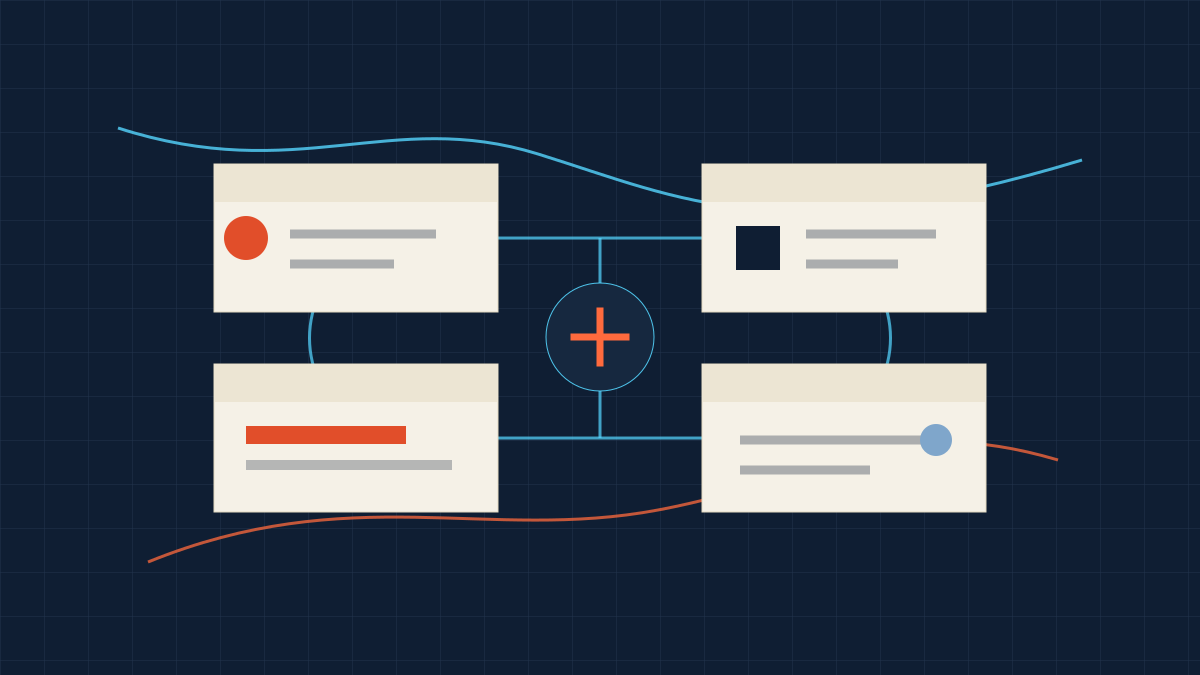
Every client CRM I’ve built, regardless of industry, comes back to the same four related databases. The specific fields change; the relationships almost never do.
The four core databases
- Contacts: every person you’ve talked to, ever. One row per human, not per deal.
- Companies: the organization a contact belongs to, related back to Contacts.
- Deals: a specific opportunity, related to both a Contact and a Company, with a status field driving your pipeline view.
- Interactions: a log of every call, email, or meeting, related to a Deal, so history is never lost when someone leaves.
Why this structure holds up
Keeping Contacts and Companies separate, rather than one combined database, is the detail that makes this scale. It means a single company can have five contacts without duplicating company-level information five times, and a contact who changes companies doesn’t break your entire history.
The one view that matters most
A pipeline board grouped by Deal status, with Company and primary Contact shown as related properties, is the single view most teams live in day to day. Everything else (reports, forecasts, activity logs) gets built as filtered views on top of these same four databases, not as separate systems.