Notion is genuinely good at a lot of things, but it isn’t the last stop for every growing operation. At some point, a workflow outgrows what a flexible database tool can comfortably do, and forcing it to keep up costs more than building the real thing would.
Five signs you’ve outgrown it
- You’re building workarounds for permissions. Notion’s permission model is coarse. If you’re duplicating databases just to hide fields from certain viewers, that’s a sign you need real role-based access.
- Your automations are held together with third-party glue. A couple of Zapier or Make steps is normal. Fifteen of them chained together, each one a single point of failure, is not sustainable.
- Performance is degrading. Large, heavily-related databases start to lag. If pages take a beat to load for your team every day, that’s real lost time, not a minor annoyance.
- You need something Notion structurally can’t do. Real-time multi-user editing of structured records, complex calculations across thousands of rows, or a customer-facing experience: these live outside what Notion is built for.
- The workaround has become the product. If your “operations tool” is actually functioning as customer-facing software, it’s time to build customer-facing software.
What to do instead
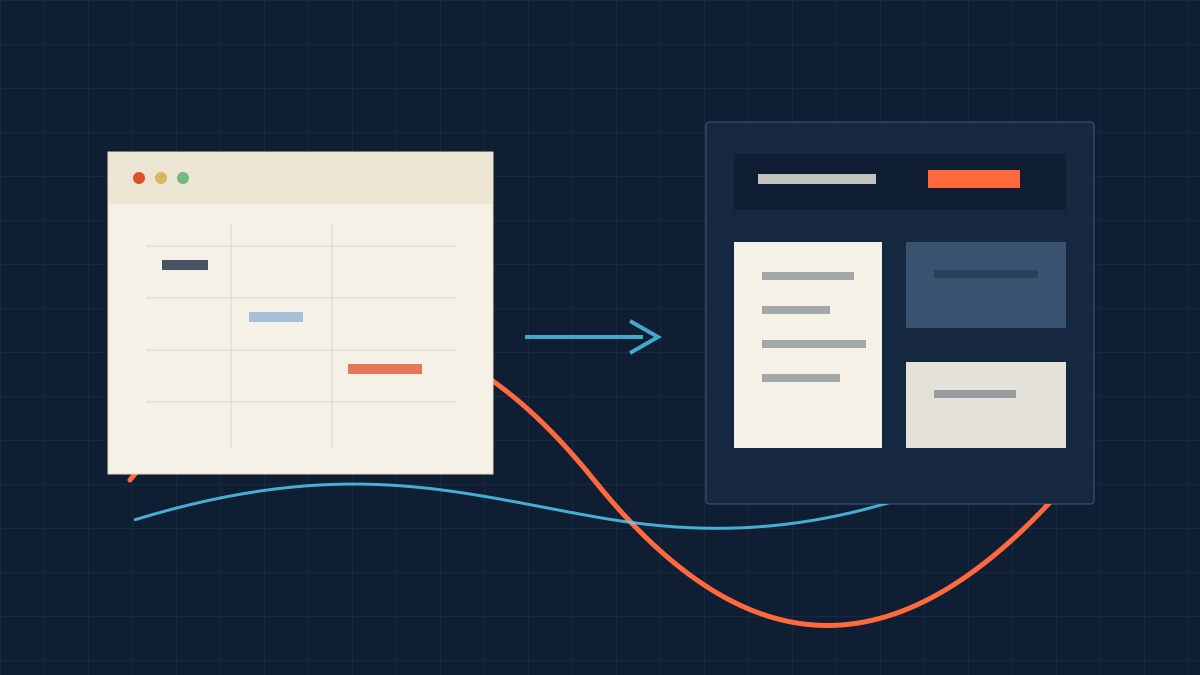
Graduating from Notion doesn’t mean starting over. The data model you’ve already built in Notion is usually a very good first draft of the schema a real application needs, which means the migration is faster than people expect, and nothing about the time you spent building the Notion version was wasted.